Evil, experience, life

Dear Reader,
I have been thinking about radical evil and the banality of evil.
In 1945, Hannah Arendt wrote that “the problem of evil will be the fundamental question of postwar intellectual life in Europe.”
Even if evil was not the central question in postwar Europe, it remained a central question for Arendt over the course of her life.
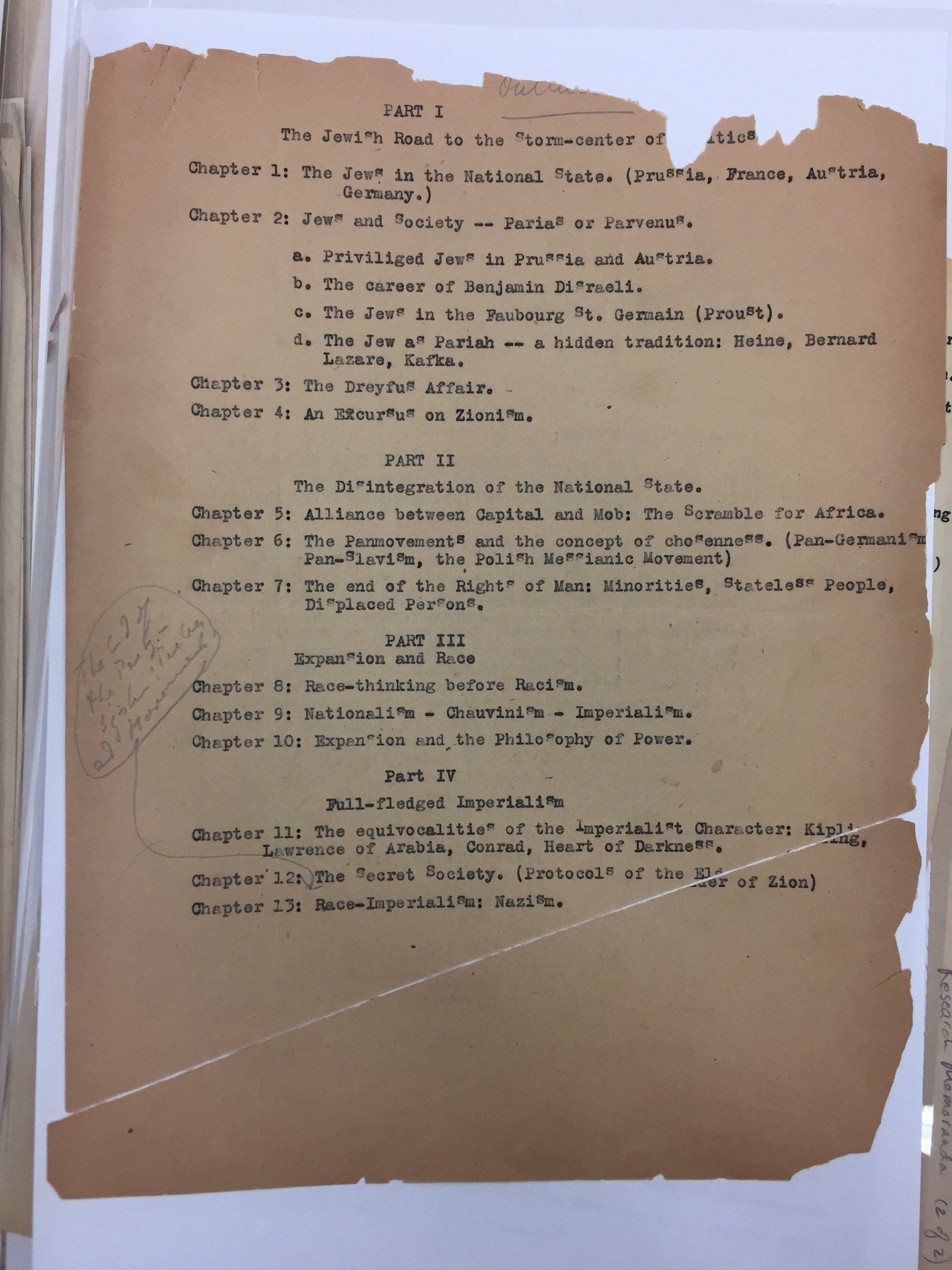
While many people are familiar with Arendt’s concept of the banality of evil, or the inability to imagine the world from the perspective of another, many are less familiar with her concept of radical evil that appears at the end of The Origins of Totalitarianism.
Radical evil, Arendt argued, renders human beings superfluous, by systematically stripping them of their human dignity.
Arendt breaks radical evil down into a three-step process:
“The first essential step on the road to total domination is to kill the juridical person in the man.” Which means, stripping a people of their political rights.
“The next decisive step in the preparation of living corpses is the murder of the moral person in man.” Which means, the invader will try to destroy human solidarity by making people complicit in their crimes. Arendt adds, “The alternative is no longer between good and evil, but between murder and murder.”
The final step is the destruction of all spontaneity. “After the murder of the moral person and the annihilation of the juridical person, the destruction of individuality is almost always successful.”
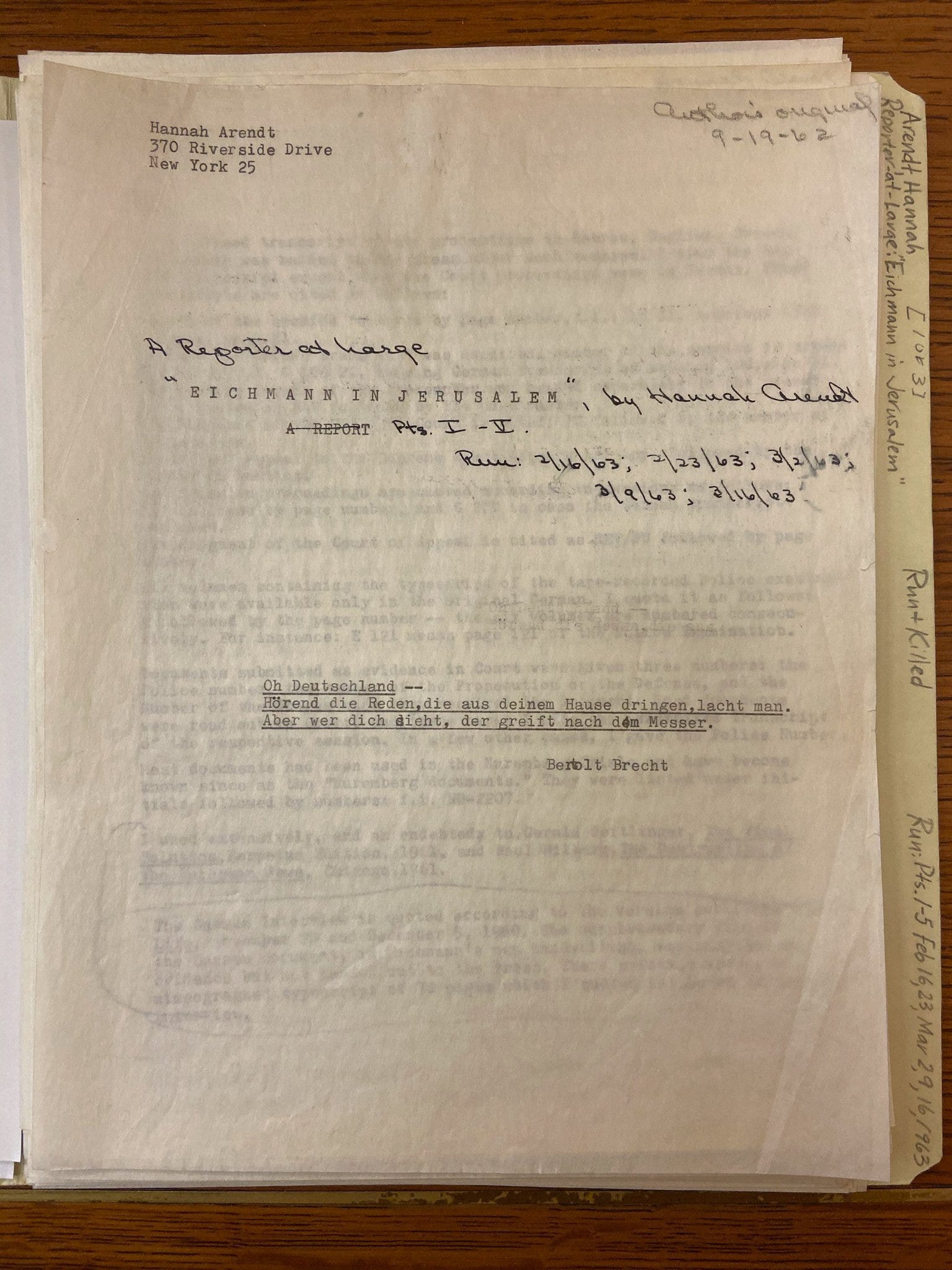
Arendt’s concept of radical evil is different from and compatible with her concept of the banality of evil. Adolf Eichmann, Hitler’s chief logician, was responsible for carrying out orders. And in him Arendt saw a buffoonish bureaucrat incapable of deeper human thought, of empathy.
Today, we see both concepts unfolding side-by-side, reshaped by the means of digital technology. But the goal of radical evil remains the same: to strip people of their humanity, their identity, their individuality, their spontaneity, their natality, their ability to create.
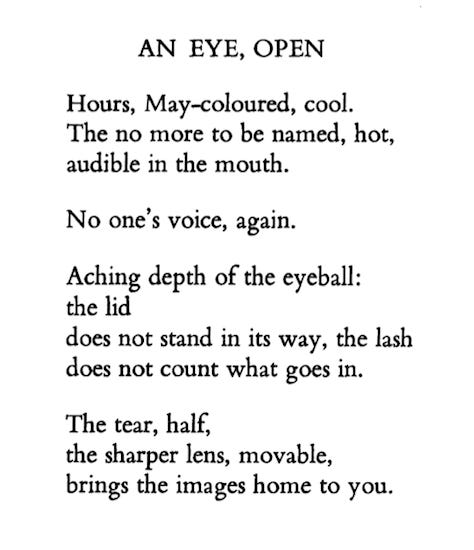
Away from philosophy, I’ve been thinking a lot about the poet Paul Celan:
And the artist William Kentridge. In this short video Kentridge talks about his work History of the Main Complaint (1996) and how artists draw upon tragedy to create, and whether or not art can redeem the exploitation of catastrophe. He says:
In the activity of making work, there’s a sense that if you spend a day or two days drawing an object or an image, there’s a sympathy towards that object embodied in the human labor making the drawing.
Here is the full video:
And here is one last poem this week from Ilya Kaminsky, whose poem, We Lived Happily During the War, has gone viral.
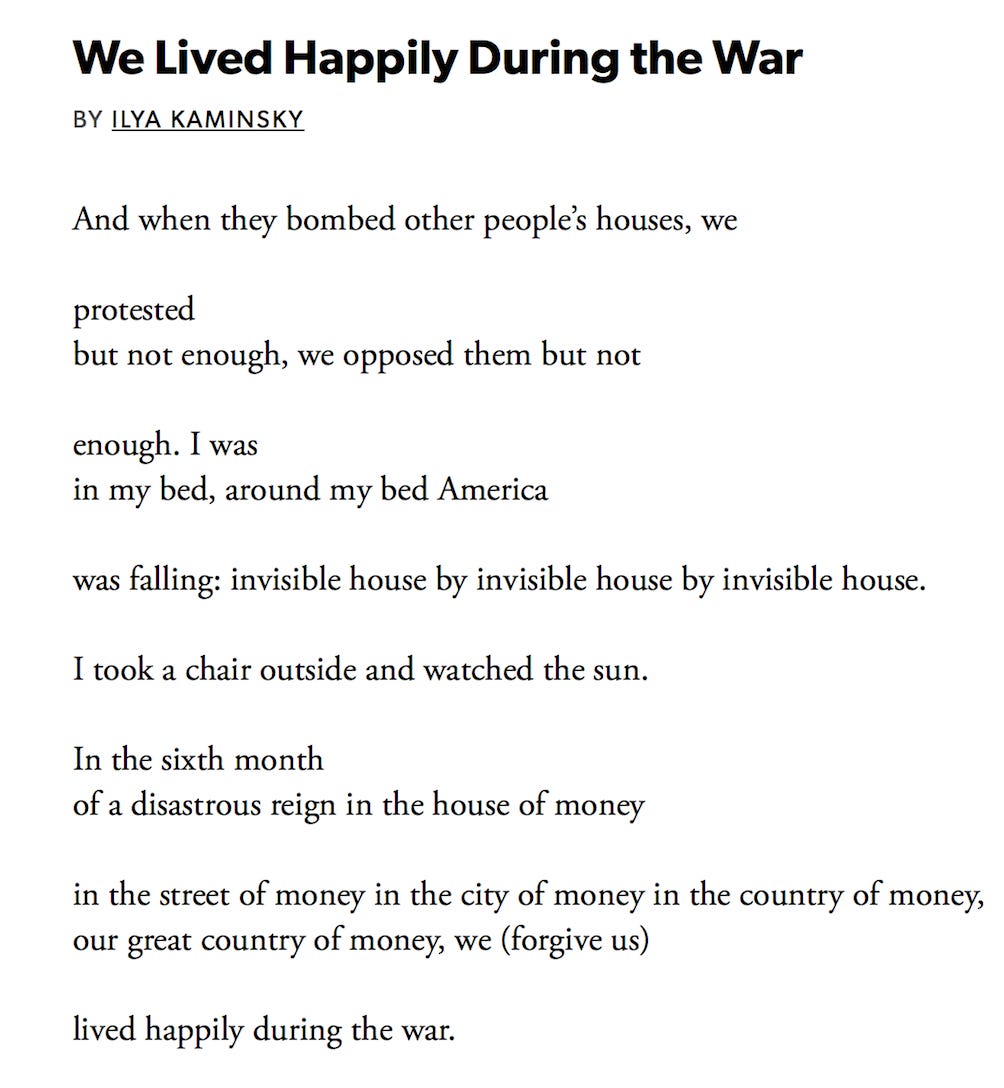
Here is a conversation with Kaminsky in LitHub.
If it is within your means please consider supporting HIAS or the International Rescue Committee:
https://ukrainewar.carrd.co
Emergency donation to HIAS in Ukraine: https://act.hias.org/page/6048/donate/1
The International Rescue Committee: https://www.rescue.org/article/how-can-i-help-ukraine
Yours,
Sam
Events this week:
Wednesday March 9th I will be in conversation with D.H. Rodowick at the American Library in Paris. We will be talking about Hannah Arendt now. This is a hybrid event.
You can RSVP here.
Classes:
Sado-Masochism starts this Thursday! A few spots left here.
And I’m teaching Hannah Arendt’s The Origins of Totalitarianism this April here. There are a couple spots left.