In the library
building a library of loneliness

Dear Reader,
I’ve been building a library of loneliness over the past few years and I want to begin sharing my research with you.
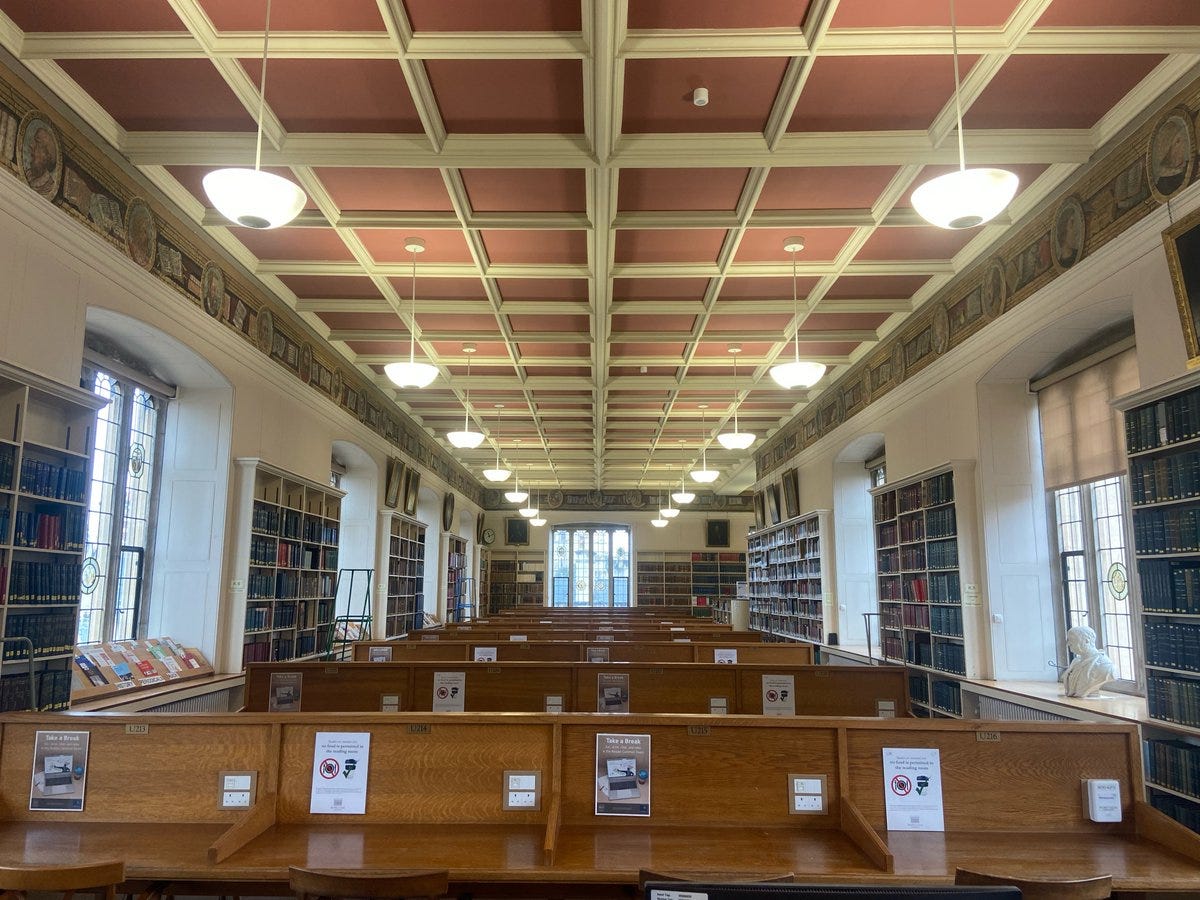
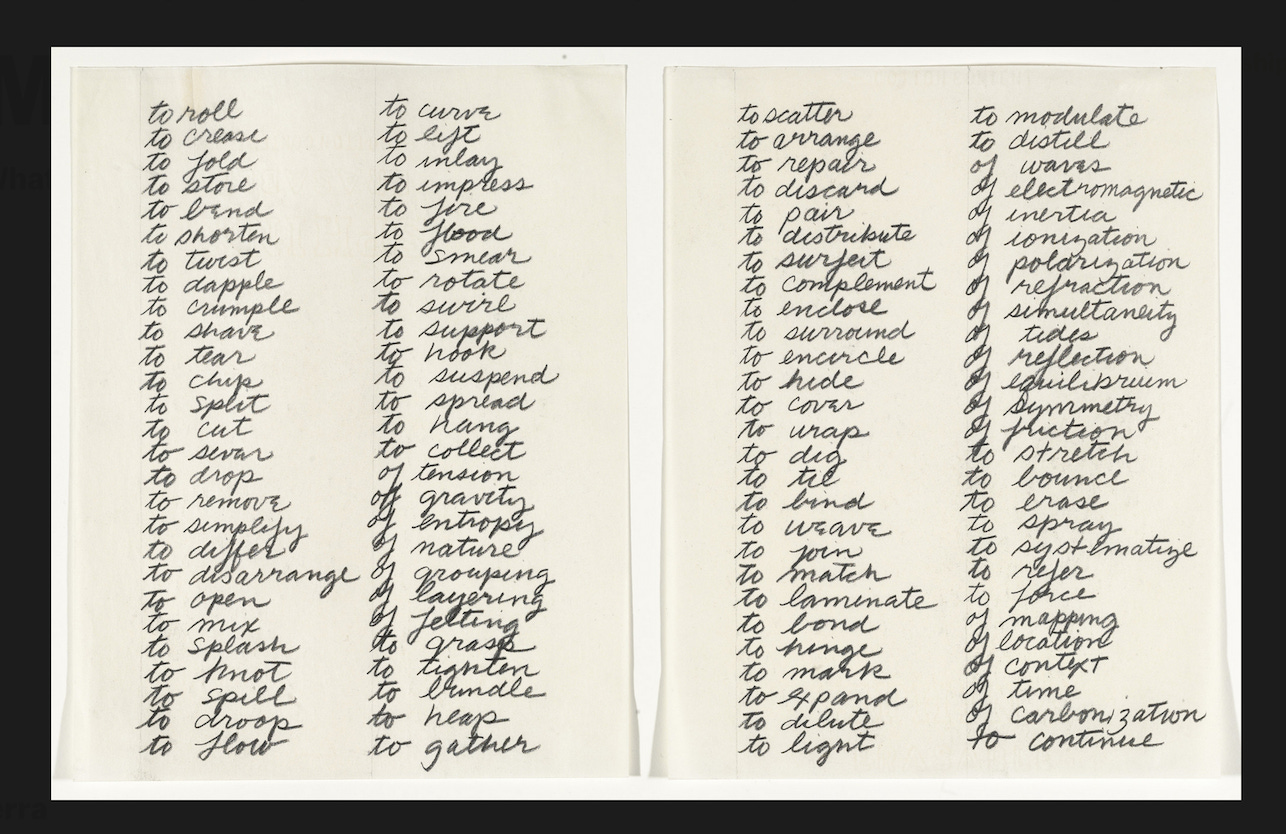
As I’ve read through mountains of work, I’ve collected poems, novels, images, words, lists, and stories about loneliness, love, tenderness, touch, creativity, and loss. I was inspired to begin keeping a library of loneliness when I encountered Richard Serra’s “Verb list” for touching and being together.
As I’ve been working on loneliness I’ve noticed certain slippages in my own language. For example, instead of saying “I want to talk to you,” I’ve started saying, “I want to talk with you.” And stealing a page from Arendt, I’ve begun trying to think in terms of “and” instead of “but,” and using the more democratic “a” instead of the definitive “the.”
One question I’ve held onto while writing is: How can language nourish the space between?
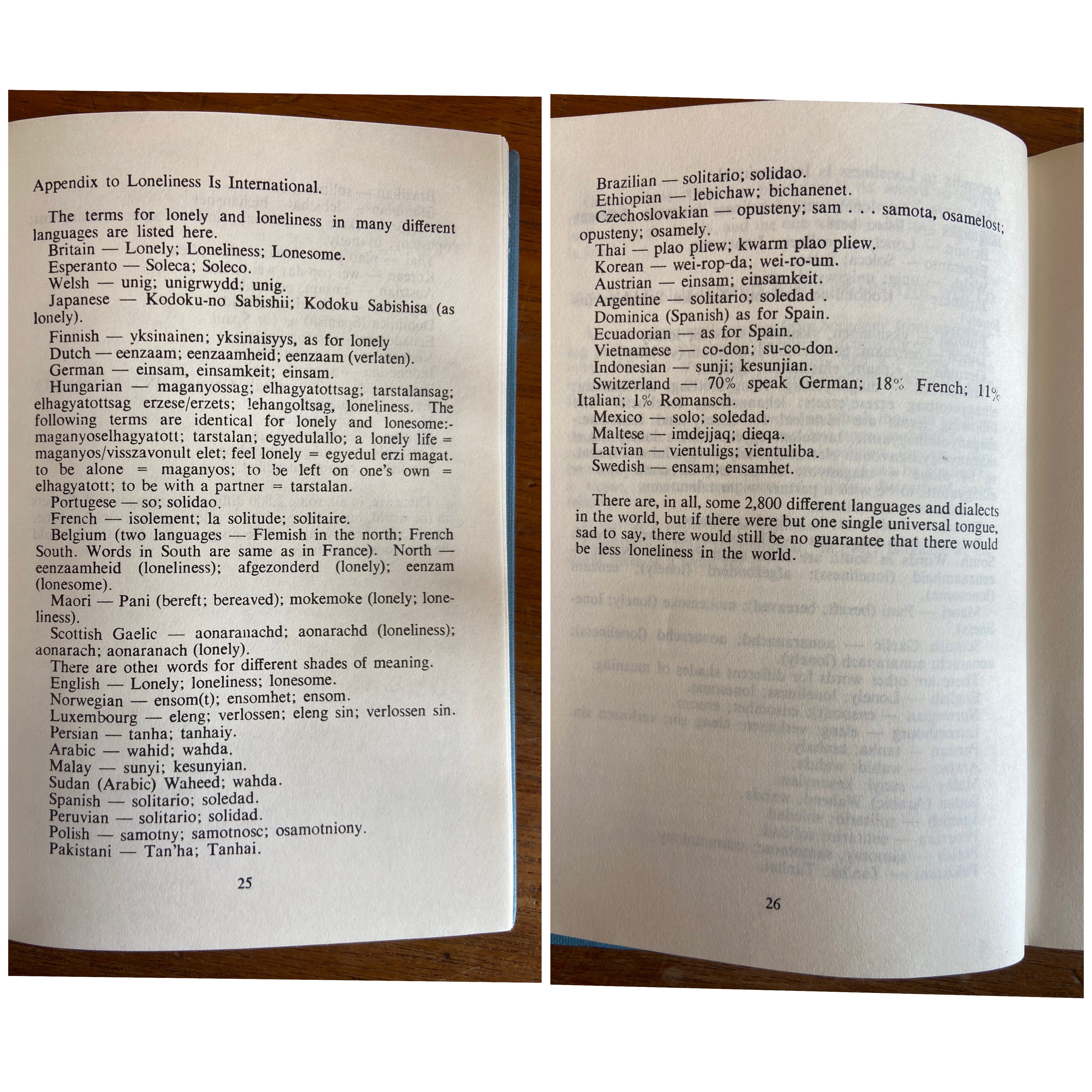
This week I stumbled across a beautiful list of words for loneliness in other languages in an old Catholic pamphlet. The author notes, “if there were but one single universal tongue, sad to say, there would still be no guarantee that there would be less loneliness in the world.”
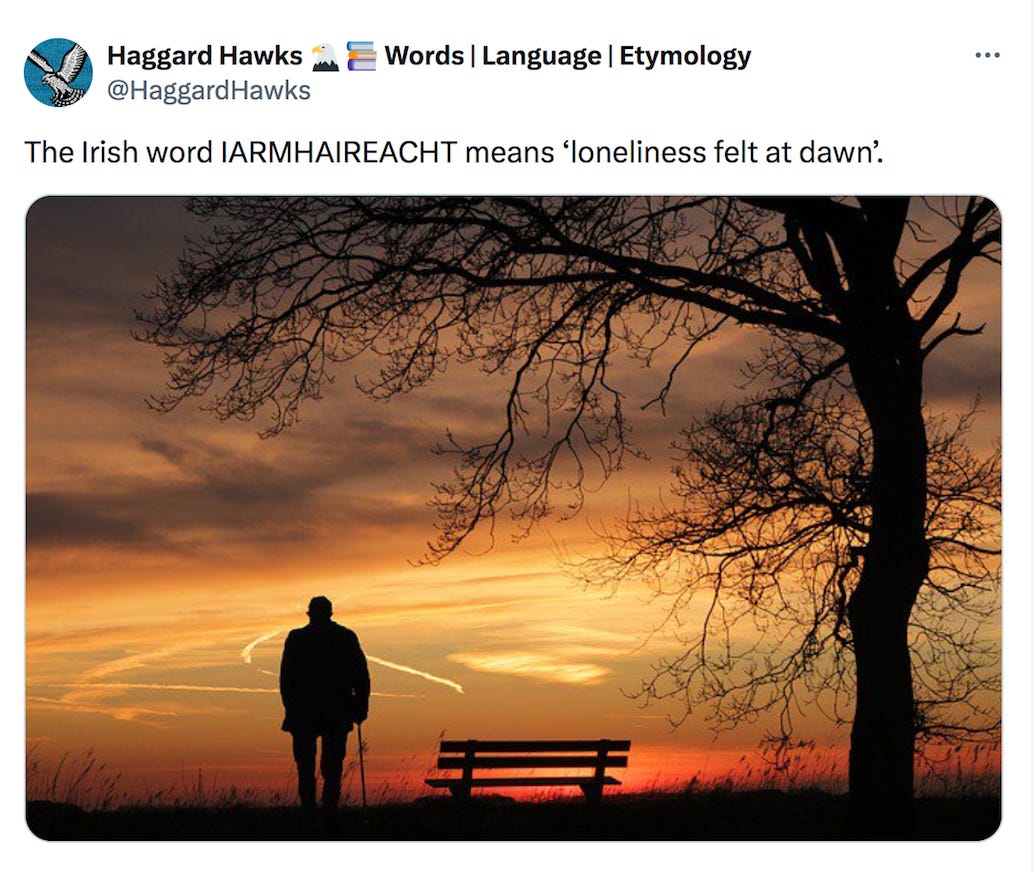
To this list I add the Irish word Iarmhaireacht from Dinneen's Dictionary. It means “‘the loneliness felt at cock-crow’, as opposed to aduantas an tsléibhe, which means the loneliness of the mountain.”
Do you have a favorite word for loneliness? Please leave it in the comments below.
Until soon,
Sam
Summer courses:
June: The Pre-Raphaelites: Art, Beauty, and Transgression
Enroll here.
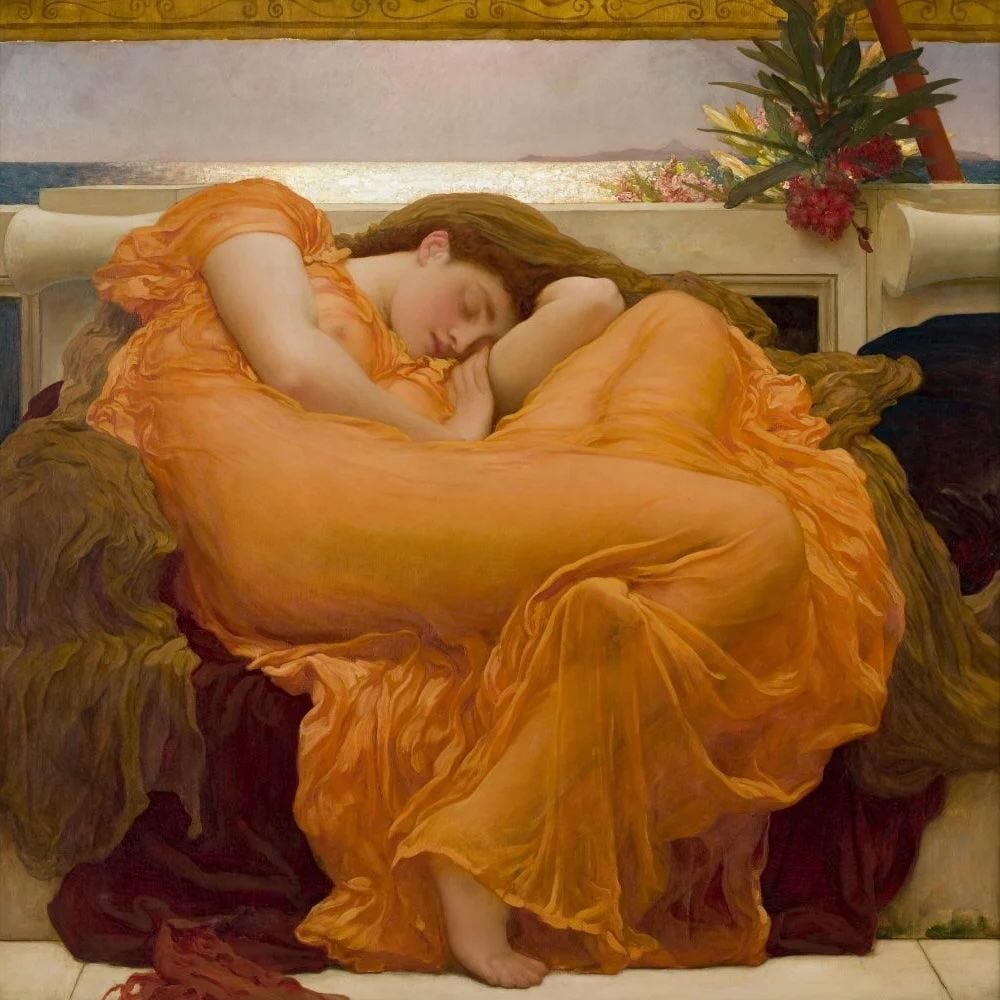
What makes an image beautiful? What makes it shocking? Condemned by Charles Dickens as “degenerate,” the Pre-Raphaelites have been called the “bad boys of the British art world.” Frustrated with the classical aesthetic style dictated by the work of the Italian Renaissance painter Raphael, they revolted, seeking to replace the ideal with the real. Religious figures were painted in detail, revealing their human nature. The consummate nude reclining was replaced by sexually empowered women standing. The muted marble tones of deferential and derivative canvases were replaced by daring pigment that demanded attention. Words like “sacrilegious” and “blasphemous,” were hurled at Pre-Raphaelite works for daring to depict, among other things: prostitution, love, emigration, poverty, and death. But what motivated—socially, politically, and artistically—the Pre-Raphaelite movement and its “shocking” aesthetic? And how did the Pre-Raphaelites change the way we visualize beauty, feeling, and the real?
In this course we will explore the emergence of the Pre-Raphaelite Brotherhood in its historical, artistic, and political context. We will look at the work of William Holman Hunt, John Everett Millais, Dante Gabriel Rossetti, Edward Burne-Jones, William Morris, and James Collinson, Thomas Charles Farrer, Charles Herbert Moore, Fidelia Bridges, among others. Digging into the work, reputations, and trans-Atlantic influence of these Victorian-era rebels, we will ask: What does it mean to depict nature? How does one converse in the language of flowers? What does it mean for a work of art to be avant-garde? How are we to understand symbolism over time? How did Pre-Raphaelites approach and represent gender and sexuality? How are we to think about questions of beauty and truth today in a world of digital reproduction? What does it mean to “go to nature”? What does it mean to depict the real? Alongside the visual study of key Pre-Raphaelite art, we’ll read from the Pre-Raphaelite periodical The Germ, as well as works by Christina Rosetti, Algernon Charles Swinburne, George Meredith, and John Ruskin, among many others.
July: Hannah Arendt: The Human Condition
Enroll here.

What does it mean to be human in the world today? Hannah Arendt’s The Human Condition (1958) is a provocative treatise on what it means to live on earth and share the world in common. Her study, originally intended to be titled Amor Mundi (Love of the World), investigates the central activities of human life—labor, work, action—and their corresponding realms—private, social, public. For Arendt, The Human Condition is about protecting spaces of freedom and the ways in which we move through the world. Beginning with man’s exploration of space in the 1950s, Arendt is concerned with the ways in which modern technologies are alienating people from the world held in common. From the triumph of labor over work, to the need for promises and forgiveness, Arendt offers us an understanding of what it means to be human in the world today.
In this class we will consider Arendt’s central claims in the context of our own time, in which the distinction between private and public is being progressively erased. Arendt’s insistence that we must “stop and think what we are doing” only becomes timelier in an era of technological bombardment, fake news, and the sense of worldly alienation that so many feel in the face of increasing privatization. We will read the entirety of The Human Condition, and consider the relationships between scientific advancement, earthliness, and worldliness as we explore the realms of labor, work, and action. Along the way, we will confront foundational questions regarding forms of political action and ask: Are there essential characteristics of human life today? In what ways do science and technology both facilitate and undermine our capacity for care, thinking, and judgment? Can love be political? And what does it mean to be at home in the world?
PS just came across: ἐρῆμος (erêmos) -- lonely, lonesome, solitary in Attic Greek. Can also mean bereft of, destitute of, undefended. As a noun it can also mean an undefended legal action, such as when you don't show up in court and the judgement goes against you by default. Can also mean a desert.
About the most brutal depiction of loneliness I've ever seen in a novel: The Man Who Was Late by Louis Begley. He's the Stephen King of loneliness.