
Dear Reader,
Welcome August! Welcome New Moon! The heat in Oxford broke and now it feels a bit like early fall with the cool breeze.
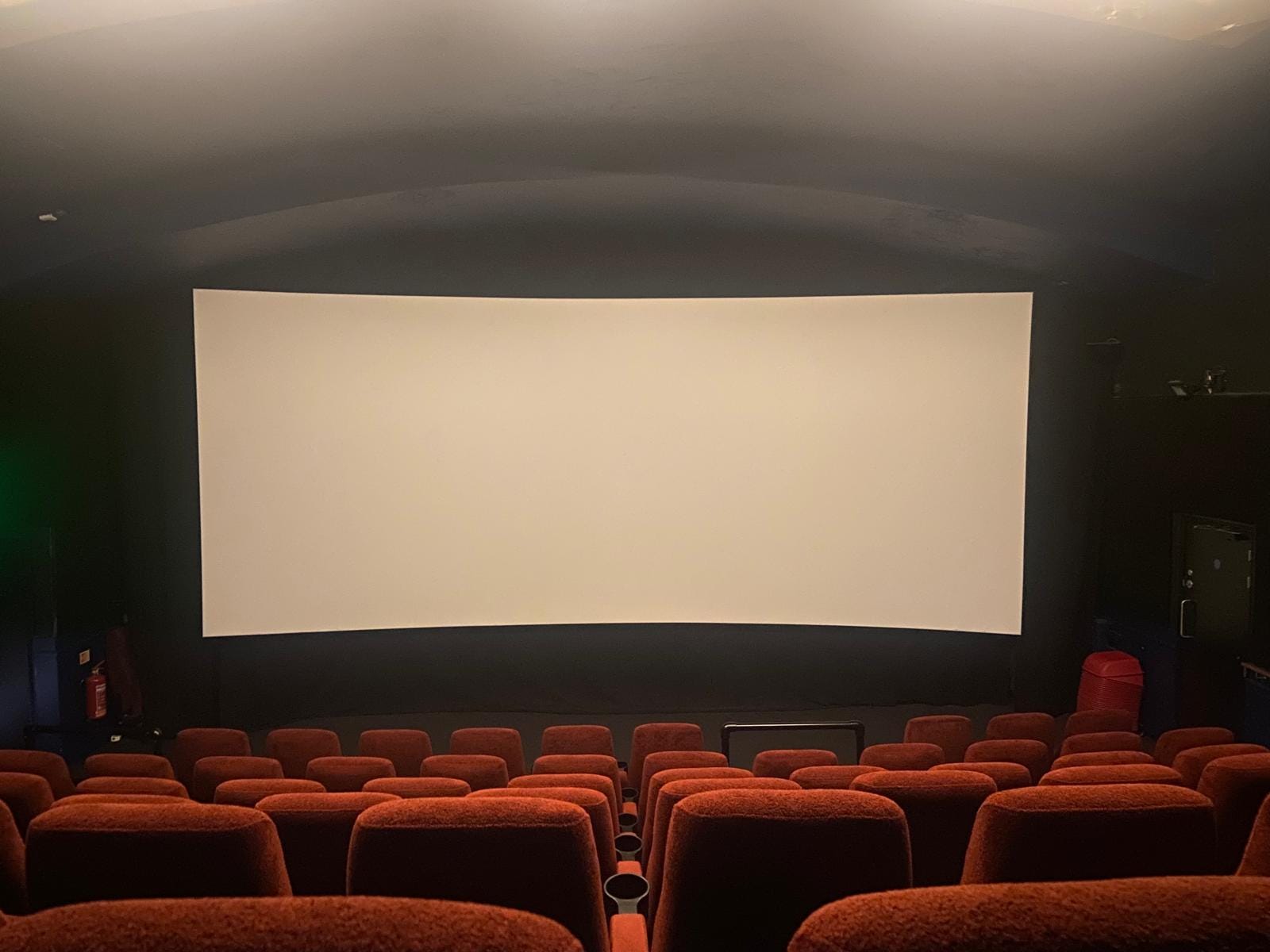
The local cinema was showing one of my favorites, Paris, Texas (1984) this week. A neo-Western about a father, son and lost mother. It sits nicely next to McCarthy’s The Road in certain ways. Man, in the desert, wandering—looking for that elusive thing called home amidst harsh climes.
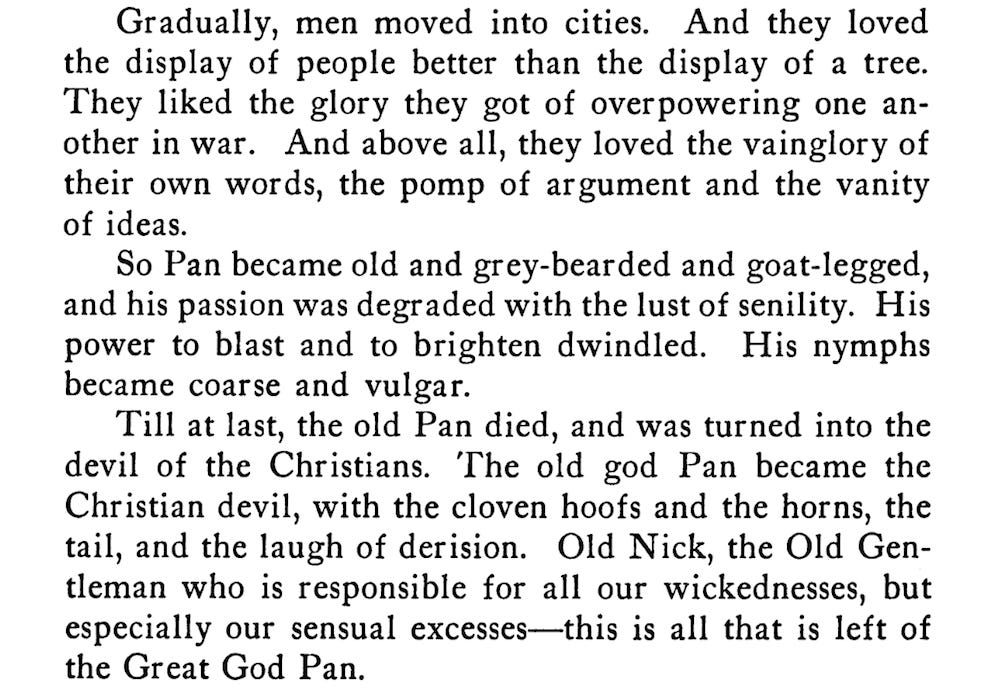
This week I returned to D.H. Lawrence’s essay, “Pan in America” (1924), to think about changing conceptions of nature in modernity.
Do you have a favorite essay on Nature? Please share.
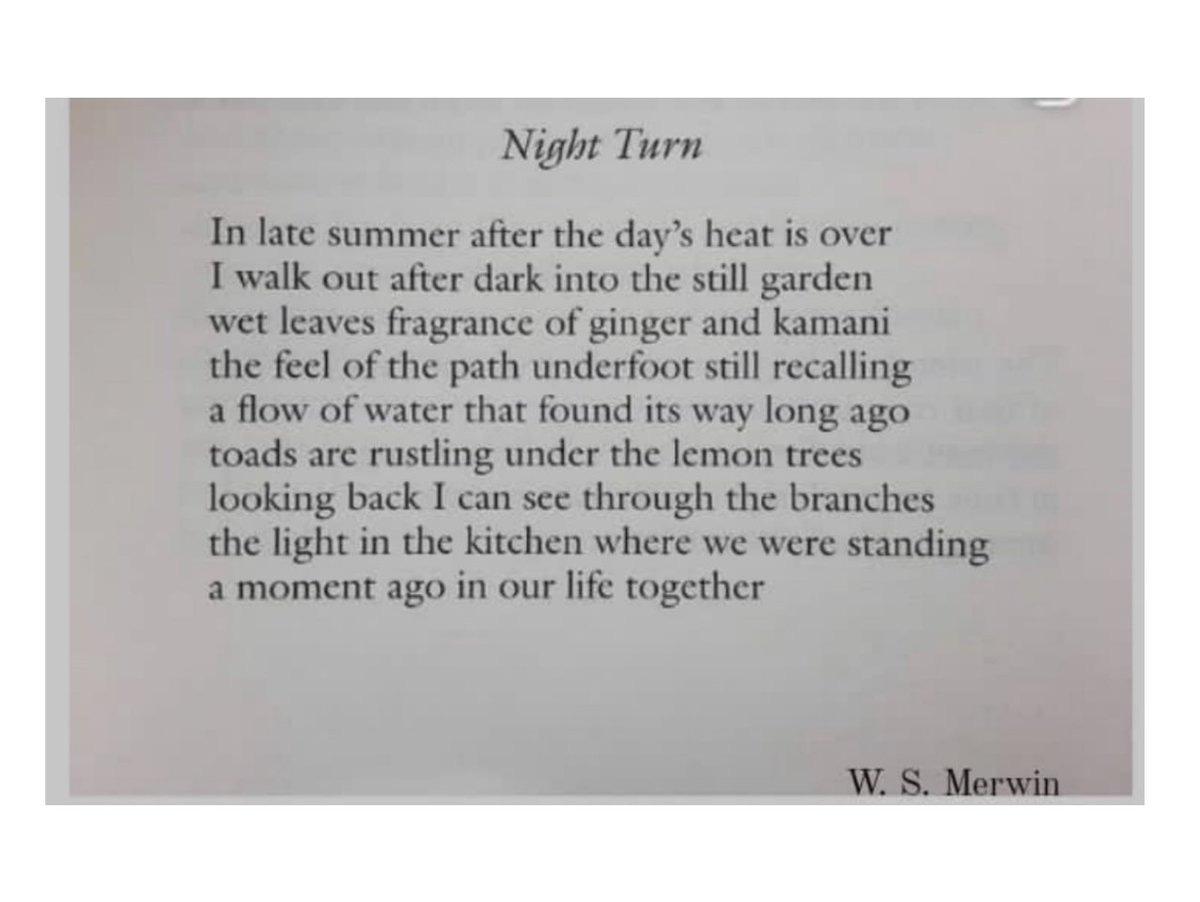
A poem by W.S. Merwin:
And since I’m missing New York right now, some Bill Evans for your Sunday afternoon:
Until soon,
Sam
September course: Ralph Waldo Emerson: Philosophy and Solitude
Enroll here.
Transcendence, Emerson wrote, is to move beyond the physical world of our senses into spiritual experience through free will and intuition. He believed that God could be known if we could only find a way to look into our soul and find a connection to nature. A father of American transcendentalism, Emerson turned readers away from looking at the world through concepts like time and space and instead turned toward the imagination. An influence on Friedrich Nietzsche, Emerson argued that we find ourselves in solitude, alone. Free from the influences of society and relations that shape our personalities. Can self-reliance grant us freedom? Is it possible to discover one’s true self? Can we learn to follow our own inner-voice, instead of the voice of another? What does it mean to “trust thyself”? What is the difference between self-reliance and individualism? What is the relationship between experience and authority? Between experience and self-authority?
In this course we will read the work of Ralph Waldo Emerson, including his major essays on “Experience,” “Circles,” “Self-Reliance,” “Nature,” “The Divinity School Address,” “Education,” “The Over-Soul,” and “The Poet.” Readings will be paired with entries from Emerson’s journals, correspondence with Henry David Thoreau. Secondary readings might include Nietzsche, Thoreau, William James, Harold Bloom, and Stanley Cavell, among others. Throughout we will imagine what an ideal form of education might look like in our world today. We will ask how technology has altered our notions of individualism and community. Is it possible to find oneself in nature today? How did Romanticism influence Emerson’s vision of the self? And is it possible to think poetically in our world of digital reality?
October course: Hannah Arendt’s The Origins of Totalitarianism
Enroll here.
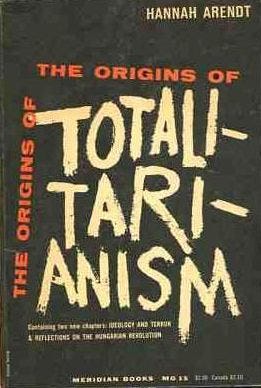
When Hannah Arendt published The Origins of Totalitarianism in 1951 she set out to provide a political framework for understanding the phenomenal appearance of National Socialism in the world, and its terrifying consequences. Offering a historical account of imperialism, anti-Semitism, and the atomized individual, Arendt’s work remains one of the most profound attempts at understanding the underlying social, political, and economic conditions that enabled totalitarianism to emerge.
In this course, students will read the entirety of the text and consider Arendt’s accounts of modern antisemitism, the spread of imperialism, and the human rights crisis engendered by the normalization of the nation-state following the First World War. In what ways did the institution of racism, as a form of ideology that collapsed the private and public realms, create an “iron-band” of totalitarianism? How was the rise of totalitarianism linked to the nation-state and the dissolution of heterogeneous modes of living together? And what are the contemporary implications of Arendt’s critique in this new era of refugees and statelessness, wherein the living conditions of “mere life” remain horrifically common?
Nature in city spaces, James Joyce “hitherandthithering waters” (FW 216.04). The baptismal motif transforms the natural into the theological in the urban space.
Nature in the very circle of life and death:
“Till tree from tree, tree among trees tree over tree become stone to stone, stone between stones stone under stone for ever.
O Loud, hear the wee beseech of thees of each of these thy unlitten ones! Grant sleep in hour's time, O Loud!
That they take no chill. That they do ming no merder. That they shall not gomeet madhowiatrees.
Loud, heap miseries upon us yet entwine our arts with laughter low!”
James Joyce, Finnegans Wake
Dublin’s cosmic nature:
“The heaventree of stars hung with humid nightblue fruit.”
James Joyce, Ulysses
My favorite of all essays on Nature is a short book by John Fowles called The Tree.
Thanks for the Merwin poem. He is able to render Nature (I wish we had another way to say it) without obstruction.
https://www.thriftbooks.com/w/the-tree_john-fowles/446447/item/10895875/?utm_source=google&utm_medium=cpc&utm_campaign=low_vol_f%2fm%2fs_standard_shopping_retention&utm_adgroup=&utm_term=&utm_content=689003201234&gad_source=1&gclid=Cj0KCQjwzby1BhCQARIsAJ_0t5Ow7l273S0dN_m2iBqexrV37_2-HHJ02hviDs3tP8zTnyOAtFvCQFkaAi8sEALw_wcB#idiq=10895875&edition=4558938